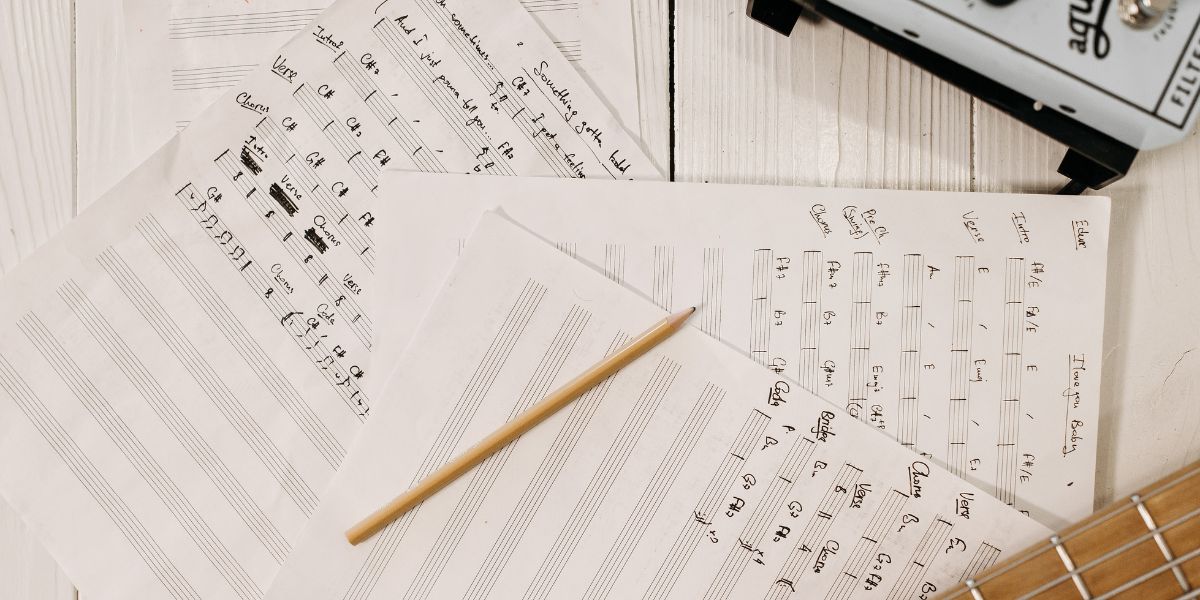
If you're new to music, understanding theory can seem daunting. Yet, grasping the basics of musical notes, scales, and chords can significantly enhance your creativity. You'll discover how these elements work together to create melodies and harmonies. As you start to piece everything together, you'll find there's much more to explore. So, what's the first step in this journey of musical discovery?
The Basics of Musical Notes
Musical notes are the building blocks of music, each with its own unique pitch and duration. You'll encounter notes represented by different symbols on a staff, indicating how high or low a sound should be.
The most common notes include whole notes, half notes, quarter notes, and eighth notes. Each note has a specific value, determining how long you hold it during a performance. Understanding these values helps you maintain rhythm and timing.
You'll also notice that notes can be sharp or flat, altering their pitch slightly. As you dive into music theory, recognizing these elements will give you a solid foundation, allowing you to read and play music more effectively.
Embrace these basics, and you'll be well on your way!
Understanding Scales and Their Importance
Scales form the backbone of music, providing a framework for melodies and harmonies. When you understand scales, you unlock the ability to create and recognize musical patterns.
Each scale consists of a specific sequence of notes, allowing you to explore different emotions and styles. For instance, the major scale tends to evoke happiness, while the minor scale often brings a more somber tone.
Exploring Chords and Harmony
Once you grasp the significance of scales, you can begin to appreciate how chords and harmony enhance your musical expression.
Chords are simply groups of notes played together, creating a fuller sound. You'll often encounter major and minor chords, which evoke different emotions—majors sound bright and happy, while minors feel darker and more introspective.
Harmony arises when multiple chords are played in succession, crafting a rich tapestry of sound. Experimenting with chord progressions can drastically change the mood of your composition.
Start with simple triads and explore variations, like seventh chords for added depth. As you dive deeper, you'll discover how these elements interact, allowing you to express your ideas and emotions more effectively through music.
Reading Sheet Music Made Easy
Reading sheet music can seem daunting at first, but it's a skill that opens up a world of musical possibilities. Start by familiarizing yourself with the staff, which consists of five lines and four spaces. Notes sit on these lines and spaces, representing different pitches. Use the treble and bass clefs to identify whether you're playing higher or lower notes.
Remember, each note has a specific duration, indicated by its shape—whole, half, quarter, etc. Practice recognizing common symbols like rests and dynamics, which add expression to your playing. Break down pieces into small sections, and don't forget to count beats!
With patience and practice, reading sheet music will become second nature, enhancing your musical journey. Enjoy the process!
Conclusion
In conclusion, diving into music theory opens up a world of creativity and expression. By grasping the basics of musical notes, scales, chords, and reading sheet music, you'll build a strong foundation for your musical journey. Remember, practice and patience are key to honing your skills. So, keep exploring and experimenting with what you learn. Enjoy the process of making music, and let your newfound knowledge inspire your unique sound!
Trending Products